

How We Helped a Gaming Club Win Back Customers with Email Marketing
We’re discussing a project for a modern gaming club in Poland that faced a challenge: most visitors came only once. We immersed ourselves in the world of gamers and developed a personalized email strategy and gamification to bring customers back and build their loyalty.

How We Helped a Gaming Club Win Back Customers with Email Marketing
How We Helped a Gaming Club Win Back Customers with Email Marketing How We Helped a Gaming Club Win Back Customers with Email Marketing How We Helped a Gaming Club Win Back Customers with Email Marketing How We Helped a Gaming Club Win Back Customers with Email Marketing How We Helped a Gaming Club Win Back Customers with Email Marketing How We Helped a Gaming Club Win Back Customers with Email Marketing How We Helped a Gaming Club Win Back Customers with Email Marketing How We Helped a Gaming Club Win Back Customers with Email Marketing How We Helped a Gaming Club Win Back Customers with Email Marketing
How Email Marketing Helped a Gaming Club Win Back Customers and Boost Engagement
In Poland, there’s a place that brings together gamers and those seeking new experiences. This modern gaming club offers an atmosphere of competition and camaraderie, creating unforgettable memories. However, even here, a major challenge emerged: most customers visited only once and never returned. How could this be fixed? Our project tells the story of how we used email marketing to turn one-time visitors into regular guests.
Client’s Request: How to Bring Back Lost Customers
The club approached us with a significant issue: 63% of their customers visited only once. They had attempted to increase visit frequency through isolated activities, but these efforts didn’t yield results. The goal was ambitious—boost the average visit frequency by 20%. We knew that achieving this required not only working with the existing customer base but also developing a strategy to enhance loyalty and expand the client database.
Where It All Started: Understanding the Audience
We began by immersing ourselves in the gaming club’s world. Through market research and interviews with the club’s management, we identified their strengths and challenges. The product itself was excellent: high-quality equipment, a welcoming staff, and a great atmosphere—elements customers praised in their reviews. So, the issue wasn’t with the product’s quality.
Next, we analyzed the club’s target audience:
▪️ Core Gamers: Hardcore gamers who visited the club regularly, playing for long hours. Gaming was a major part of their lives and their main hobby.
▪️ Casual Players: Visitors who played for fun, treating the gaming club as an occasional entertainment option—just like going to the movies or an amusement park. Gaming wasn’t their primary hobby, and they were open to a wider range of leisure activities.
Since hardcore gamers already had a high visit frequency, we focused our project on casual visitors. Our research showed that this audience valued immersive gaming experiences. For example, escape rooms were incredibly popular among them. Therefore, any entertainment for this segment had to include elements of gamification.
Strategy: Turning Emails into a Game
Our next step was developing an email marketing strategy. Based on our research, we decided to incorporate gamification into our customer retention efforts. The club’s primary communication channels were email and Discord. Since Discord engagement was already high, we focused on improving email marketing.
We began by analyzing the club’s existing email performance and industry benchmarks to identify key growth opportunities. Our strategy focused on three main criteria:
▪️ Email Frequency – Maintaining regular communication with different types of emails.
▪️ Personalization – Ensuring relevant content tailored to customer activity.
▪️ Tone of Communication – Aligning messaging with the brand’s voice and target audience for clarity and consistency.
We determined the optimal days and times for email sends, as well as the ideal frequency for this category.
Next, we examined the customer journey—from the first interaction with the club to repeat visits. Based on this, we introduced new touchpoints designed to reduce churn and increase visit frequency. This led to the development of a new email series tailored to customer needs while driving repeat visits. Examples included balance top-up reminders and referral incentives.
Overall, we introduced 15 new email campaigns to engage different customer segments.
After that, we formed an approach to building emails:
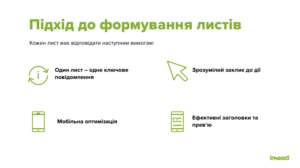
Additionally, we crafted a structured email approach that ensured consistency in communication, reinforcing the club’s brand identity.
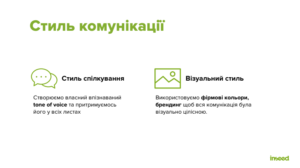
Our strategy incorporated key engagement points:
▪️ Welcome Emails – A friendly introduction to the club.
▪️ Review Bonuses – Incentives for leaving feedback.
▪️ Holiday Emails – Personalized offers for Halloween, customer birthdays, and the club’s anniversary.
It was also very important to implement a system for tracking the results of email campaigns to be able to evaluate the effectiveness of the strategy and adjust it if necessary. To do this, we built an email tracking scheme using UTM tags in such a way as to clearly analyze the effectiveness of each email campaign not only in terms of email opens, but also further user actions on the website, including booking visits.
The final stage of strategy development was forecasting KPIs and annual results from its implementation.
Dmytro Kudinov, CEO of inseed.agency:
“What I loved about this project was the abundance of available data, which made it easier to form hypotheses. Often, clients know something is wrong but lack specific data to pinpoint the issue. In this case, the client approached us with a clearly quantified problem and a defined goal. This allowed us to skip the stage of setting measurable objectives and jump straight into execution. I personally enjoy working with such well-prepared clients.”
Implementation: Steps to automation
Once the strategy was finalized, we began implementation. The first step was setting up trigger-based emails, such as:
▪️ Welcome messages
▪️ Subscription expiration reminders
▪️ Reactivation campaigns
Since the client was already using GetResponse, and their team was familiar with the platform, we built the automation within this system.
Additionally, the client’s development team created a tracking system that monitored user actions and sent data to GetResponse via webhooks.
We also designed manual email campaigns for special events, holiday promotions, and exclusive offers initiated by the club’s staff.
To expand the email list, we focused on lead generation:
▪️ Popup forms on the website offering bonuses for email sign-ups.
▪️ Referral programs that rewarded customers for inviting friends.
Results of the first month: What we have achieved
The results from the first month confirmed that we were on the right track:
▪️ Email open rates reached 31%, aligning with industry benchmarks.
▪️ Certain email categories achieved a 20% click rate, nearly double the industry average.
▪️ Conversion rates from emails hit 16.67%, significantly outperforming other channels.
Conclusion: How Email Marketing Changed the Game
Through this project, we transformed customer communication into an interactive experience and made email marketing a key tool for customer retention.
This case study highlights how a data-driven, personalized strategy can not only solve business challenges but also create new growth opportunities.
If you have a similar request, please contact us at partnership@inseed.marketing
Learn more about our case studies.
Contact us Contact us Contact us Contact us Contact us Contact us Contact us Contact us Contact us

Thank you!
In the near future we will reply to your email.